Most brides approach their trial as a dress rehearsal for their look. That's partly right — but it undersells what a well-run trial actually produces.
A trial is a diagnostic session, a timing calibration, and a communication test. The look is one output. The other outputs are just as important.
Before the appointment
Arrive with your hair clean, dry, and free of heavy product — the same condition you'll have it in on your wedding morning. Heavy serums or oils in the hair before the trial affect how the style performs and give you inaccurate data.
For makeup trials: arrive with a clean, moisturized face. No foundation or heavy primer. We build the base ourselves so we can see exactly how your skin receives product.
What to bring
- →Reference photos of looks you love — specific is better than general
- →Reference photos of looks that didn't work for you, with notes on why
- →A photo of your dress neckline and back detail
- →Your veil and any hair accessories you've chosen or are considering
- →An honest appetite for feedback and adjustment
What happens during the appointment
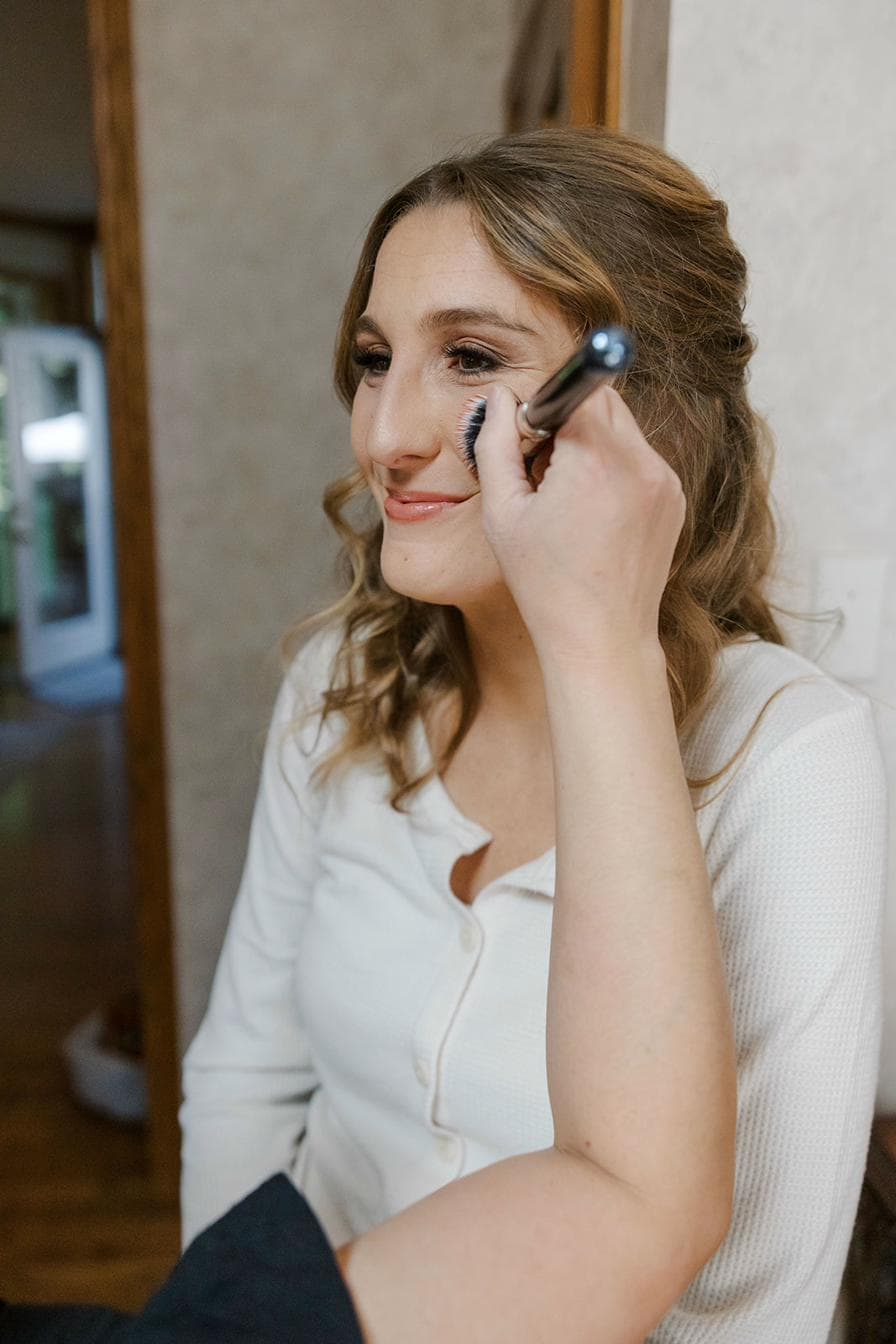
We start by talking through your references and your vision. Then we build the look — your hair, in your specific style. We'll adjust as we go, ask for feedback at key points, and make notes on what worked and what needed modification.
We time the session. Not roughly — precisely. The time your hair takes at the trial is the time we build your wedding morning around. If it takes 105 minutes, your timeline gets 105 minutes.
The trial's most important output isn't the look. It's the timing data.
How to give useful feedback
The most useful feedback is specific. "It feels too heavy on the left side" is useful. "I don't love it" is not. Try to articulate what specifically isn't working — the placement, the volume, the texture, the way it interacts with your face shape.
You are allowed to change direction mid-trial. You are allowed to start over. The purpose of the appointment is to arrive at a place where you feel completely confident, not to protect time.
After the trial
We send you photos and notes from the appointment. These go into your file. On your wedding morning, we work directly from that record — the same placement, the same products, the same timing. The morning of your wedding should feel like a repeat of something you've already approved, because it is.
Ready to book your trial? We work out of our Copley studio for all trial appointments.
Let's Talk →Frequently Asked Questions
How long does a bridal trial appointment take?
A full hair and makeup trial at MAVON typically runs 2.5–3.5 hours. A hair-only trial is 90–120 minutes. We time the session precisely and that timing goes into your wedding morning schedule.
What should I bring to my bridal trial?
Bring reference photos of looks you love and looks you don't (with notes on why). Bring a photo of your dress neckline and back. Bring your veil and any accessories you're considering. Come with hair clean, dry, and free of heavy product.
Can I change my look after the trial?
Yes. A trial doesn't lock you in — it gives you information. Many brides adjust after the trial, and some completely change direction. That's the purpose of the appointment: to get data before the wedding day.