Thick hair is the easiest texture to take for granted and the most likely to be under-planned for a wedding. It holds styles beautifully — but it also overpowers them when the volume isn't managed. Here's how to get the most out of what you have.
What thick hair does well
Volume stays. Styles hold without product overload. Updos have the density to look truly full. Down styles have natural movement and body. If you have thick hair, you have the raw material for almost any bridal look.
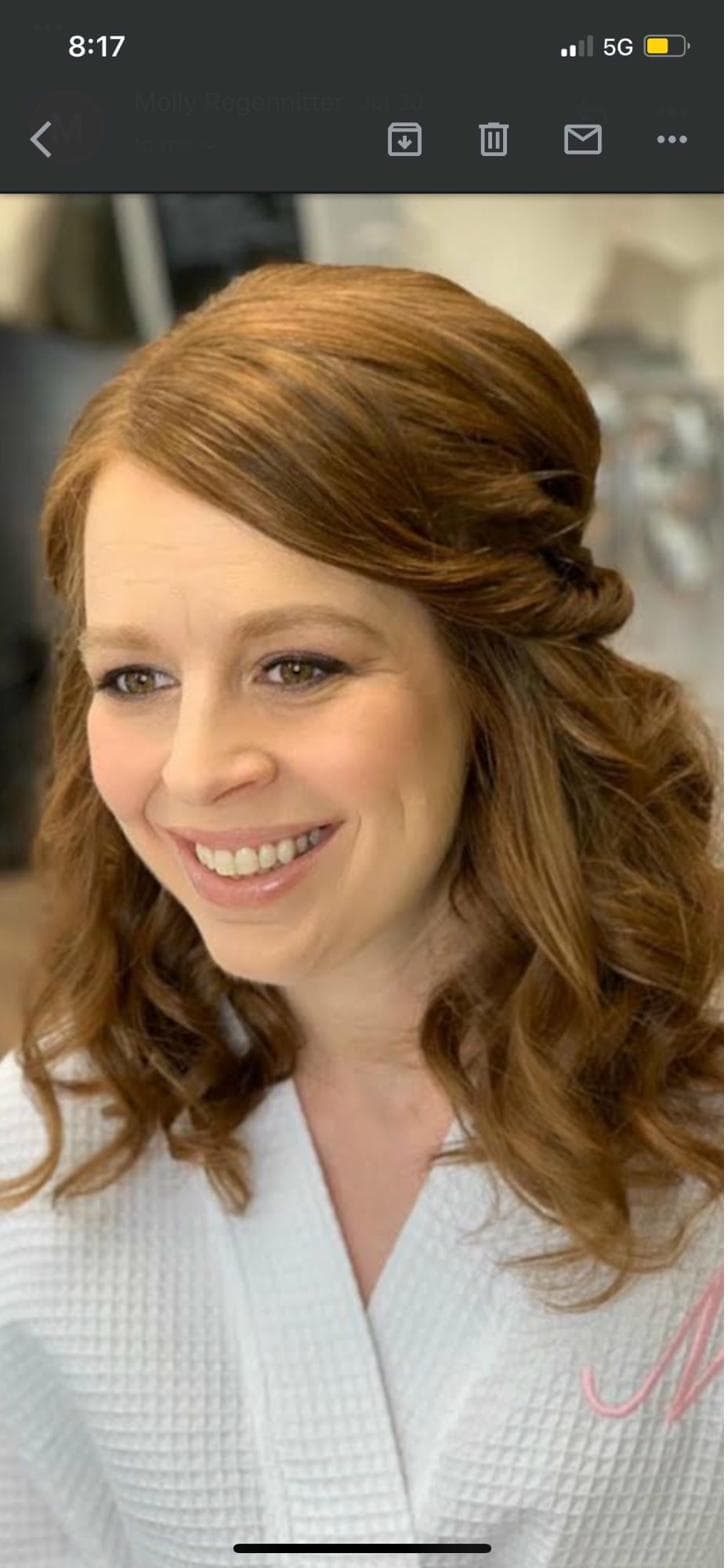
Half-up styles in particular work exceptionally well with thick hair. The natural volume at the crown is already there — the stylist shapes and controls it rather than building it from nothing.
What thick hair does less well
Thick hair can overwhelm a look. A style that looks balanced in photos with medium-density hair can look heavy and disproportionate on thick hair. This is why reference photos matter at the trial — and why the stylist needs to adjust proportions, not just replicate the technique.
Very loose, unstructured down styles on thick hair can look voluminous rather than ethereal. The styling approach for thick hair down looks involves controlled texture, not maximum volume.
The challenge with thick hair isn't adding volume. It's shaping it into something that doesn't fight the face.
Updo strategies for thick hair
The soft chignon on thick hair requires a different pinning structure than on medium or fine hair — more anchor points, more internal support, and careful management of the back volume. Done correctly, thick hair produces a chignon with exceptional presence.
For updos on very thick hair, plan for a longer session time. More hair takes more time to work through and secure. At the trial, we clock exactly how long yours takes.
What to tell your stylist at the trial
Be specific about your texture: thick, fine, coarse, silky, processed, natural. Each of these means something different and affects technique selection. "Thick" alone covers a wide range — thick and silky behaves differently than thick and coarse.
- →Tell the stylist your hair density, texture, and how it typically behaves
- →Bring photos of styles that felt proportional to your face — not just styles you loved in general
- →Discuss whether your hair has any chemical processing that affects how it behaves
- →Ask about the timeline — thick hair often takes longer and your morning should account for that
Thick hair requires a stylist who knows how to work with it, not against it. Reach out and let's talk about what we'd build for you.
Let's Talk →Frequently Asked Questions
Can you do a half-up style with very thick hair?
Yes. Thick hair is one of the most versatile textures for bridal styling. Half-up styles work particularly well with thickness — the volume at the crown stays naturally full without added product, and the weight helps the style hold.
How do you prevent a thick-hair updo from looking too heavy?
The key is strategic thinning and layering during the styling process, not the hair cutting process. We use specific pinning techniques that control volume without eliminating it, and we build the style in sections to manage the weight distribution.
Does thick hair take longer to style?
Generally, yes. More hair takes more time to work through. At the trial, we time your specific hair precisely and build that into your wedding morning schedule.